Inside the Block Fall Cabinet
TL;DR: Rotate and place falling tetrominoes to complete and clear full rows. Expect easy rules, endless depth at a pace that's levels raise the drop speed.
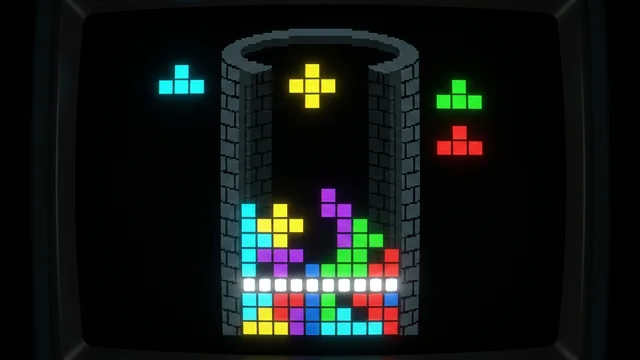
Block Fall is the falling-shape puzzle your brain refuses to put down. Seven different pieces tumble into the well one at a time, and your job is to shift them, spin them, and slot them into solid rows.
Complete a row and it vanishes; complete several with a single piece and the score multiplies fast - Clearing four lines at once is the whole reason your stack has a bottom corner reserved. Nothing chases you here except gravity: every level drops the pieces quicker, until careful planning melts into pure instinct.
Our version gives you sharp keyboard control with soft drops for steering and hard drops for commitment, touch controls tuned for thumbs, and scoring that always pays more for bravery than for tidiness. Once a day there is a seeded run where every player battles the exact same sequence of pieces - identical luck for everyone, so the leaderboard measures skill and nothing else.
Cabinet Specs
| Mission | Rotate and place falling tetrominoes to complete and clear full rows. |
|---|---|
| Row | Arcade Classics |
| Skill curve | Easy rules, endless depth |
| Tempo | Levels raise the drop speed |
| Lineage | 1984 (Elektronika 60) |
| Original | Tetris - Alexey Pajitnov, 1984 (full history) |
| Daily run | Seeded challenge, resets midnight UTC |
| Scoreboard | Global top 50, score-ranked |
Learn Block Fall in Five Moves
Pick a slot the moment a piece appears
Each of the seven shapes suits a different gap. Decide where the new piece belongs the instant it enters the well - At higher speeds there is no time to decide on the way down.
Shift and rotate mid-fall
Use the left and right arrows to slide the piece and the up arrow or X to rotate it. Every piece can be turned and steered right up until the moment it locks into the stack.
Soft drop to steer, hard drop to commit
Holding the down arrow speeds the fall while you keep full control. Space slams the piece straight down instantly - Faster and worth points, but there is no changing your mind.
Fill rows to make them vanish
A row disappears the moment every cell in it is filled, and the stack above settles down. Clear two, three, or four rows with one piece and the points multiply sharply.
Outlast the rising speed
Clearing lines raises your level, and every level makes pieces fall faster. The run ends when the stack climbs to the top of the well and a new piece has nowhere to spawn.
Score Higher at Block Fall
Keep the stack flat. A level surface accepts any of the seven shapes, so you are never forced to waste a good piece in a bad spot - Bumpy terrain is what turns bad luck into a lost game.
- Reserve one edge column as your well. Feed it nothing until a long I-piece arrives, then drop it in for a four-line clear - The single most valuable move in the game by a wide margin.
- Never bury a hole. A covered gap can cost you several rows of digging to expose again, and one point of laziness now routinely becomes twenty rows of cleanup later.
- Learn each shape's natural home. S and Z pieces want steps, the T fills notches, L and J hug corners - Placing pieces where they fit flush is how flat stacks stay flat.
- Clear singles when the stack passes halfway. Chasing a big multi-line clear from a tall stack is how runs die; trading a few points for breathing room keeps you alive to score again.
- Decide fast, place slow. Choose the destination while the piece spawns, then use soft drop to guide it in - Hard drop is for placements you are certain of, because it cannot be taken back.
- Build for the next piece, not this one. Leaving a surface that welcomes many shapes matters more than a perfect placement now, because the well does not care how pretty your last move was.
House Rules & Spin-Offs
Sprint
A pure race: clear 40 lines in the fastest time you can manage. No levels, no survival - Just raw placement speed against the clock.
Marathon
The classic long haul through steadily rising levels. Scores balloon in the late game, when every piece falls almost too fast to see.
Cascade gravity
Cleared blocks do not just vanish - Everything above tumbles down, and if the falling debris completes new rows, chains of bonus clears fire off automatically.
Invisible stack
Pieces disappear the moment they lock, leaving you to play against a board that exists only in your memory. The famous final exam of falling-block mastery.
Blocks Questions, Answered
What is the goal of Block Fall?
Why do multi-line clears score so much more?
What is the difference between soft drop and hard drop?
When does a run end?
How do levels change the game?
Where does the falling-block idea come from?
Does the daily Block Fall run give everyone the same pieces?
How does Block Fall work on a phone?
When Block Fall finally lets you go, the arcade classics row has its siblings, the arcade glossary has the vocabulary, and the player FAQ has the house rules. Guide last tuned 2026-07-19.