Classic Arcade Games - Play 10 Free in Your Browser
This row holds the machines that invented the habit: trails that grow, bricks that fall, ships that drift and cycles that turn - Every rule from the golden age, rebuilt by hand. Every machine on the Arcade Classics row is built from scratch for the browser: keyboard, mouse and touch controls, instant loading, and the honest old-school difficulty curve that made these games legends. Pick a classics cabinet below - Your best score is saved on this device automatically, and signing in with Google posts it to the global leaderboards.
Feeling brave? Every classics game also has a daily challenge: one seeded run per day, identical for every player in the world, so the scoreboard settles arguments the fair way. New classics seeds drop at midnight UTC, and yesterday's excuses expire with them.
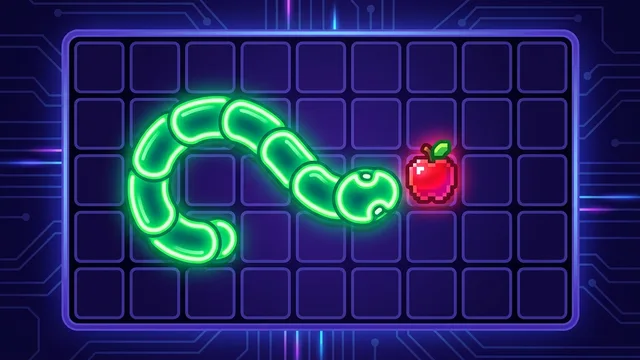 ★ Top
Snake
★ Top
Snake
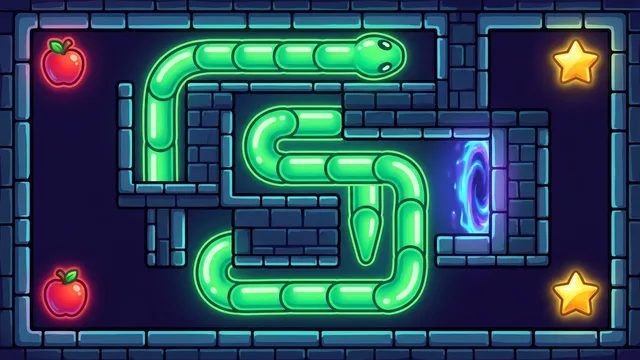 New
Snake 2
New
Snake 2
 Hot
Breakout
Hot
Breakout
 Pong
Pong
 Hot
Block Fall
Hot
Block Fall
 Lunar Lander
 New
Neon Cycles
New
Neon Cycles
 Circus Bounce
 Hot
Retro Pinball
Hot
Retro Pinball
 New
Barrel Climb
New
Barrel Climb
What Makes a Great Classics Game?
The classics survive because their rules fit in one sentence and their mastery doesn't fit in a lifetime. Snake is "eat and don't crash." Breakout is "don't drop the ball." Pong is "hit it back." Block Fall is "complete the row." Simple sentences, thousands of hours - That ratio is the whole genre.
If you're new to the floor, start with Breakout for pure feel, then graduate to Block Fall when you want your reflexes to carry a plan. Snake punishes greed, Pong punishes impatience, and all four will happily teach you the same lesson: the machine has nothing but time.
From the Golden Age to Your Browser Tab
The coin-op boom (1972-1984)
Pong hit bars in 1972 and proved a television could earn quarters. Four years later Blockade invented the grow-and-avoid loop that became Snake, and Breakout turned a single paddle into a national obsession. By 1981 Donkey Kong had added ladders, barrels and a story; by 1984 Tetris had arrived from Moscow and quietly closed the golden age with the purest design of them all.
That twelve-year window built almost everything this row plays. Cabinets earned billions of quarters not with graphics but with one honest trick: rules a child could learn and a difficulty curve nobody could finish.
The pocket rebirth
The classics should have died with the arcades. Instead they shrank. Tetris conquered the Game Boy in 1989, and in 1997 Nokia burned Snake into 350 million phones, teaching a second generation that the best games fit in a pocket and a spare minute. Snake II added wrap-around walls in 2000 and became the best-selling game nobody ever bought.
Every machine on this row descends from one of those two eras, rebuilt from scratch for the browser: same rules, same curve, no quarters.
Remember the original but not which machine here replaces it? We keep a shelf of free alternatives to the classic arcade games you grew up with, each matched to its tribute on this row.
Quick Picks for New Players
- Start here: Snake - eat, grow, and never bite your own tail.
- Newest on the row: Barrel Climb - six girders up, a hundred barrels down.
Underrated Machines on This Row
Three cabinets on this row earn fewer clicks than they deserve:
- Circus Bounce - a trampoline timing sandbox from 1977 that plays like Breakout turned inside out; the balloon rows fall faster than your confidence.
- Lunar Lander - pure physics and fuel anxiety; the only machine here where doing nothing is sometimes the perfect move.
- Neon Cycles - a duel of nerves against walls of light; one bad turn writes your own trap.
Compare the Classics Machines
| Machine | Born | Challenge | Pace |
|---|---|---|---|
| Snake | 1976 (Blockade) / 1997 (Nokia) | Easy to learn, brutal to master | Starts calm, ends frantic |
| Snake 2 | 2000 (Snake II on Nokia) | The classic, with new ways to die | Speeds and thickens every level |
| Breakout | 1976 (Atari) | Gentle start, spicy final rows | Speeds up as bricks fall |
| Pong | 1972 (Atari) | Simple rules, sneaky angles | Rally speed climbs every hit |
| Block Fall | 1984 (Elektronika 60) | Easy rules, endless depth | Levels raise the drop speed |
| Lunar Lander | 1979 (Atari vector cabinet) | Physics with consequences | Slow, tense, unforgiving |
| Neon Cycles | 1982 (light-cycle era) | Space control in fast-forward | Arena shrinks as trails grow |
| Circus Bounce | 1977 (Exidy/Atari circus era) | Breakout with a heartbeat | Every bounce raises the stakes |
| Retro Pinball | 1947 (first flippers) | Ten seconds to learn, a lifetime to nudge | You set it - Until the ball disagrees |
| Barrel Climb | 1981 (climbing-platformer era) | One jump mistimed is one life gone | Rhythmic climbing under bombardment |
Classics Questions, Answered
Are these the original arcade games?
Which classic should I start with?
Do the classics work on mobile?
When was the golden age of arcade games?
More Rows on the Floor
Space Shooters
Space Invaders · Asteroids · Missile Command · Centipede · Galaxy Divers · Star Defender · River Run · Tank Arena · Target Gallery · Jetpack
Runners & Reflex
Flappy Jet · Sky Hopper · Dino Dash · Freeway Frog · Copter Cave · Zig Zag · Rail Runner · Rocket Rider · Drop Down · Ski Rush · Key Rush · Blob Arena · Turf Trail · Loop Dash
Skill & Precision
Maze Muncher · Tower Stack · Whack-a-Mole · Retro Racer · Prize Claw · Fruit Slice · Echo Lights · Reflex Duel · Juggle Master · Balloon Pop · Fishy · Balloon Busters · Dodge Maze · Sketch Rider · Maze Runner · Antbully · Shield Hero
Sports Arcade
Air Hockey · Hoop Shot · Penalty Kicks · Dart Master · Mini Putt · Archery Range · Skee Ball · Bowman · Flight School · Wobble Run
Puzzle Arcade
2048 · Memory Flip · Gem Columns · Cube Hopper · Cave Digger · Bomb Maze · Word Cracker · Coin Clicker · Block Roller · Solitaire · Mahjong · Trick Quiz · Candy Stash · Pipemania