Inside the Memory Flip Cabinet
TL;DR: Match every pair of cards in as few flips and as little time as possible. Expect short-term memory, long-term shame at a pace that's timer squeezes, grid grows.
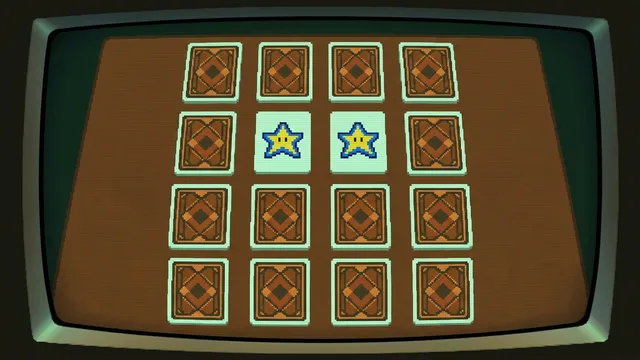
Memory Flip is the card table's oldest bet: that you can remember where anything is for more than five seconds. Flip two cards - Match and they stay, miss and they slam face-down while your brain swears it will remember next time. It will not, and that is the fun.
Our version starts you on a friendly six-pair grid and grows the board level by level to ten pairs, with a timer squeezing every round and a move counter keeping you honest. Chain matches without a miss and streak bonuses pile up fast, which turns tidy recall into real scoreboard fuel.
Cards flip with a click or a tap, so it plays as well on a phone in a queue as on a desktop between meetings. In the daily challenge, everyone gets the exact same seeded layout, so the leaderboard measures memory - Not luck of the shuffle.
Cabinet Specs
| Mission | Match every pair of cards in as few flips and as little time as possible. |
|---|---|
| Row | Puzzle Arcade |
| Skill curve | Short-term memory, long-term shame |
| Tempo | Timer squeezes, grid grows |
| Lineage | Concentration (1959) to arcade |
| Original | Concentration - 1959 (full history) |
| Daily run | Seeded challenge, resets midnight UTC |
| Scoreboard | Global top 50, score-ranked |
Learn Memory Flip in Five Moves
Flip two cards at a time
Click or tap a card to turn it face-up, then flip a second. If the pictures match, the pair stays revealed; if not, both flip back down after a moment.
Memorize every miss
A miss is not a failure - It is free information. Every card you see and fail to match is a card you now know the location of, so watch both cards on every flip.
Beat the level timer
Each level runs on a clock. Clear every pair before it hits zero to advance, and finish faster to bank more points from the time that remains.
Chain matches for streak bonuses
Matching pairs back-to-back without a miss builds a streak, and each consecutive match is worth more than the last. One sloppy guess resets the bonus.
Clear the growing grids
The board starts at six pairs and swells level by level to ten. Your moves are counted the whole way - Fewer flips means a sharper score, so guess less and know more.
Score Higher at Memory Flip
Name each card silently as you see it - "anchor, top left" - Because pairing a word and a place makes the memory stick far better than a glance alone ever will.
- Flip unknown cards first. New cards add to your mental map, and whenever one matches something you have already seen, you convert old knowledge into a guaranteed pair.
- Work the board in zones. Sweeping row by row instead of hopping randomly means every card you have seen has a neighborhood, and your brain recalls neighborhoods better than coordinates.
- Slow down early to speed up late. Careful watching in the first ten flips builds the map that lets you rattle off the last five pairs without a single miss.
- Bank known pairs in a burst to feed your streak. When you are sure of two or three pairs, clear them consecutively - The stacked streak bonuses out-score the same matches made separately.
- Use corners and edges as anchors. The four corners are the easiest positions to remember, so mentally file tricky cards by their distance from the nearest corner.
- After two misses in a row, pause one beat. Frustration flips cards faster and remembers nothing - A single calm breath costs one second and saves four wasted moves.
House Rules & Spin-Offs
Pelmanism with a full deck
The classic version: all 52 cards face-down, matching by rank and color. Brutal on the memory and still a favorite test between card-table rivals.
TV Concentration rules
Matched squares reveal pieces of a rebus puzzle, so the real contest is solving the picture-phrase before your opponent does.
Kids' picture Memory
The Milton Bradley formula from 1966 - Chunky tiles, friendly artwork, and the humbling experience of losing to a five-year-old.
Moving-card memory
Digital variants that shuffle or swap face-down cards between turns, punishing static memory and rewarding players who track motion.
Memory Questions, Answered
How is Memory Flip scored?
What happens when the timer runs out?
How big do the grids get?
How do streak bonuses work?
Is Memory Flip just luck?
Does the daily challenge shuffle differently for each player?
Can I play Memory Flip on my phone?
Is Memory Flip free to play?
Not done yet? The rest of the puzzle arcade row is one click from Memory Flip, the arcade glossary translates the slang, and the player FAQ covers scores, dailies and accounts. Guide last tuned 2026-07-19.